
Sara Abdu
A Kingdom Where No One Dies: Contours of Resonance
Conceal all borders
Feel the earth beneath you
Stand still
Be rooted
And remember
Your first home
Her womb
Now breathe
You are in the kingdom
Where no one dies
Throughout my practice, I have returned to a recurring question: what constructs identity, and what shapes the sense of belonging? Being born and raised in Saudi Arabia to Yemeni parents has placed me between geographies, but I have never approached this duality as something to resolve. Instead, it has become an ongoing dialogue. One that shifts and expands through the work itself. In this space, notions of origin loosen, and a wider field of relation becomes possible. One that anyone can step into, even momentarily.
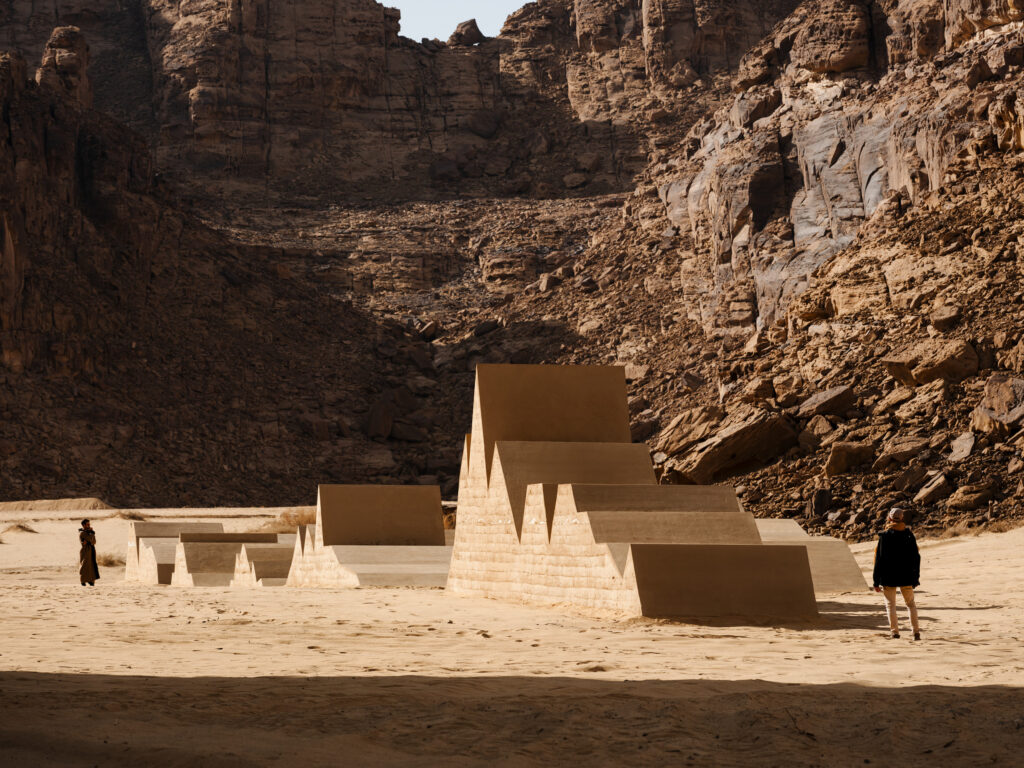
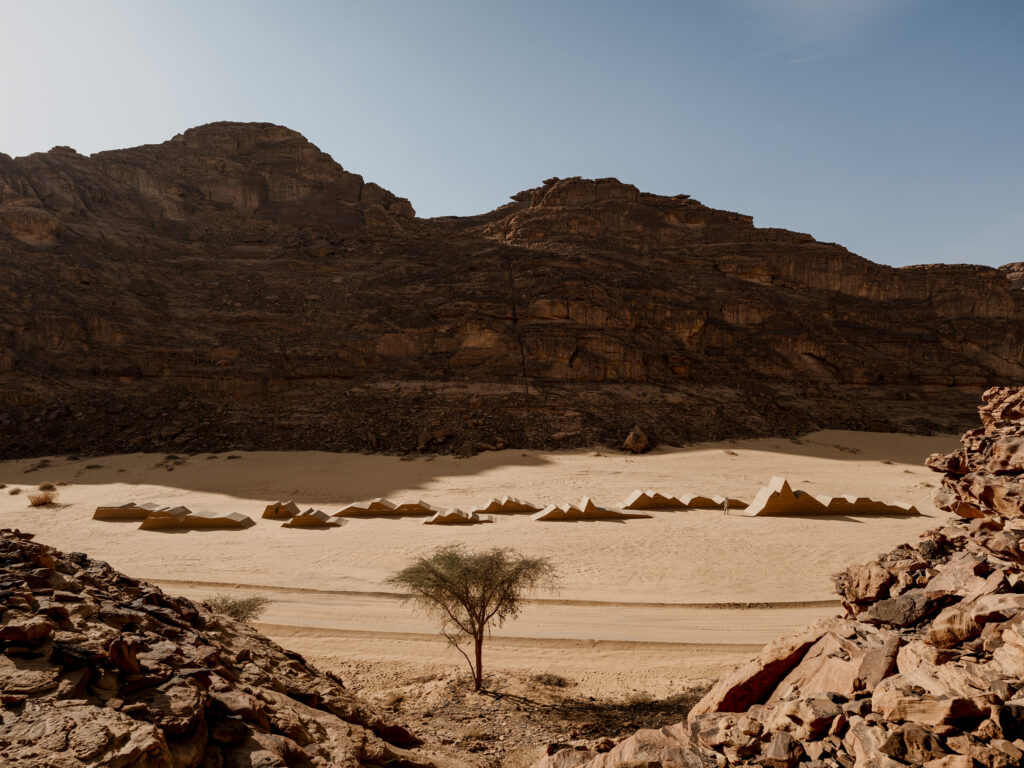
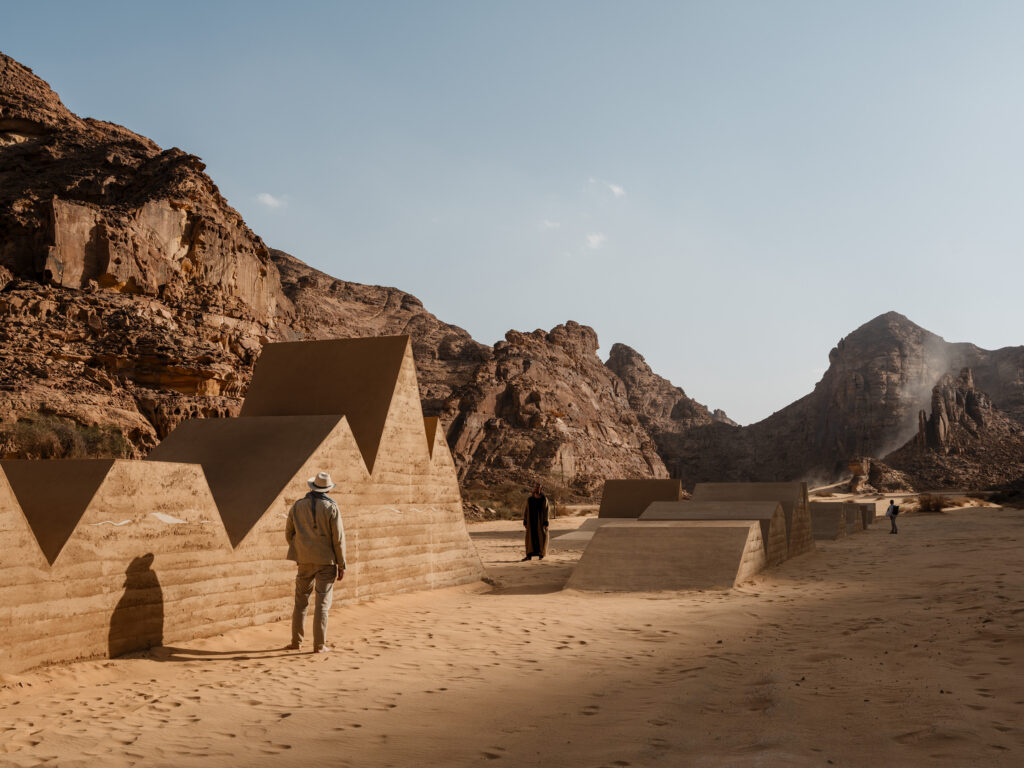
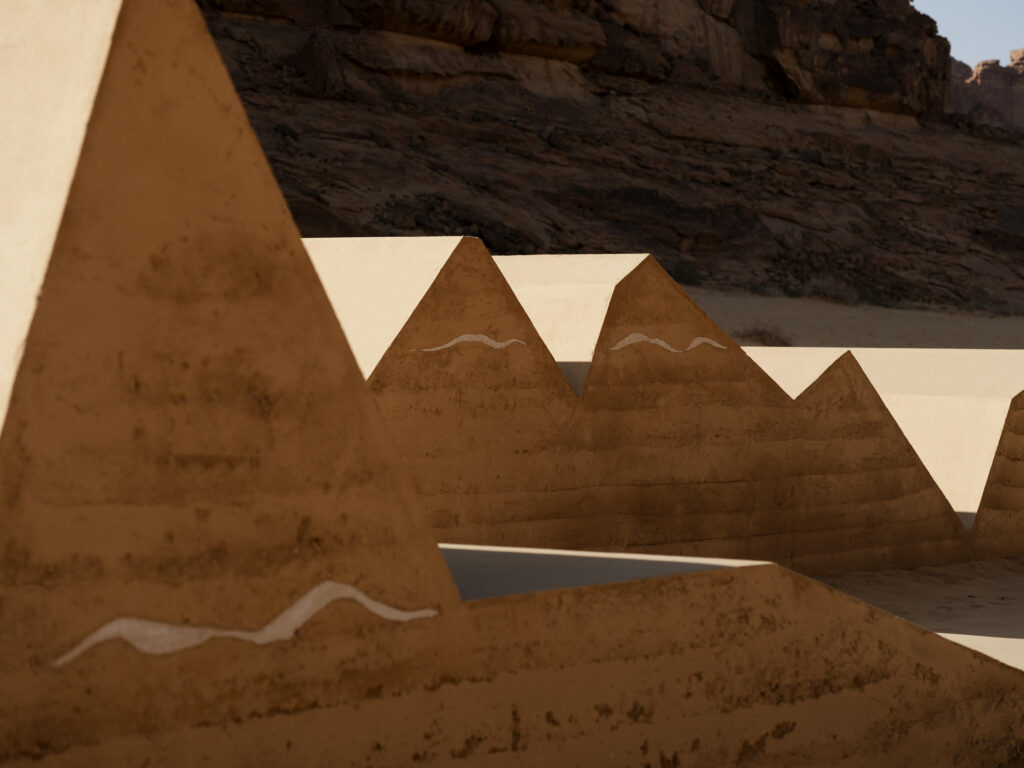
Often, this process begins with writing. Words allow me to observe and translate the nuances of this internal dialogue. For this work, I composed the poem A Kingdom Where No One Dies. It is a short invocation, a return. It asks us to remember the first terrain we ever belonged to: the womb. I recorded the poem and translated the sound of my voice into a visual anatomy. Each verse became a waveform, a line of vibration that I later transformed into sculptural contours. Converting a soundscape into a landscape.
Spending time in AlUla, I was drawn to its history as a place shaped by movement, where civilizations, travelers and trade routes intersected. It is a landscape built by crossings, by arrivals and departures, by the continuous meeting of worlds. This resonated deeply with my own sense of in-betweenness. It felt natural that the work I propose here would grow from this dialogue and emerge from the land rather than exist upon it.
This method, turning sound into form, is a way of giving material presence to something ephemeral. Sound dissipates, yet it never disappears; it lingers as energy. By casting my voice into matter, I create a space where memory, land and identity converge. For this iteration in AlUla, I wanted the work to feel as though it is born of the desert itself. We are producing it entirely on site, using sand sourced directly from AlUla, merging it with sand from Yemen. The blending of these two geologies carries personal meaning, but it also gestures toward a larger idea: a symbolic terrain where belonging is not confined, but expanded.
In A Kingdom Where No One Dies, the desert becomes a collaborator. Light, shadow and wind continually reshape the work, allowing it to exist in a state of becoming. My intention is not to create a monument, but a quiet offering, a space for reflection, continuity and return, where the contours of a voice become part of the land’s ongoing story.