
Mohammad Alfaraj
What was the Question Again?
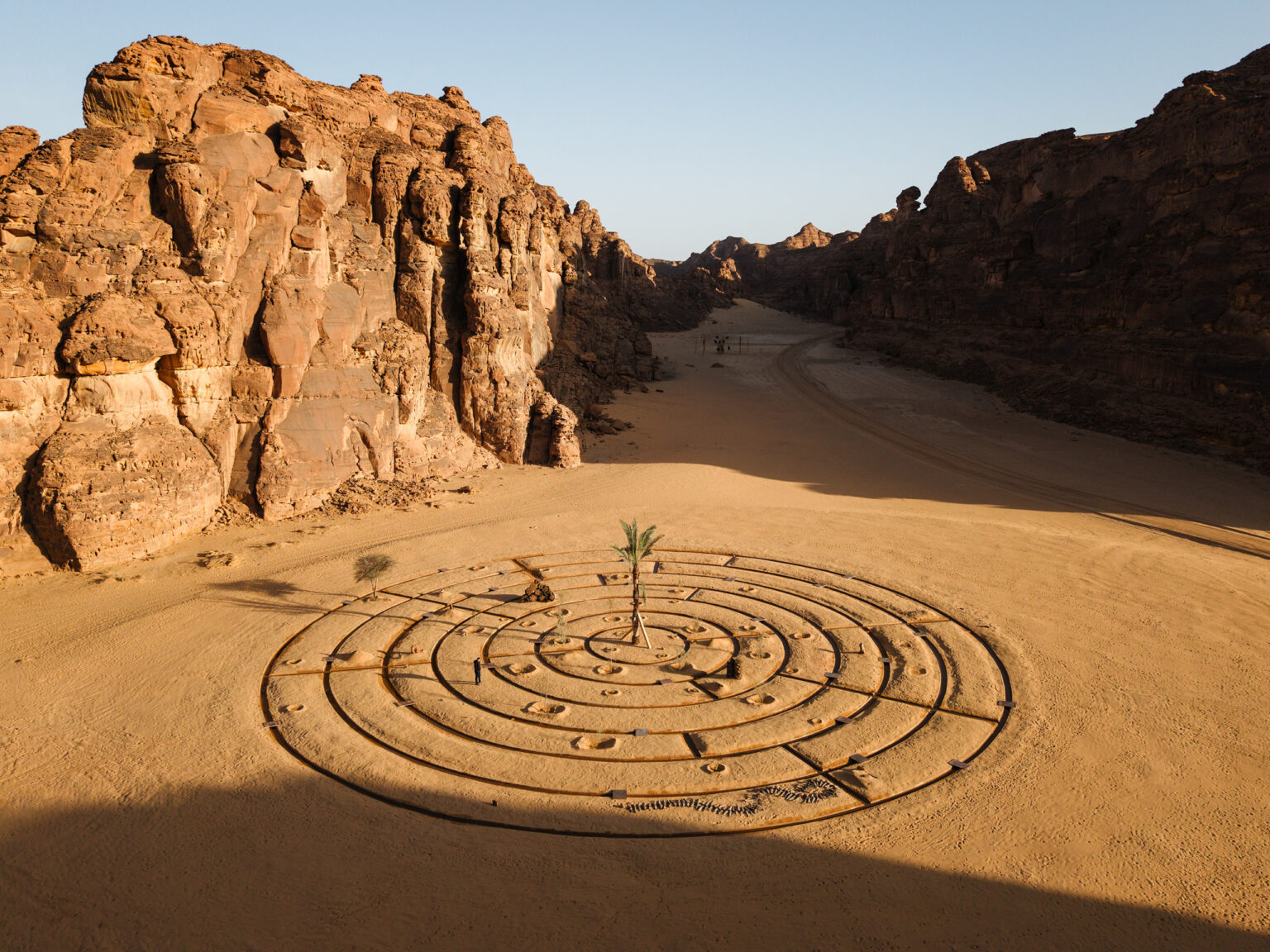
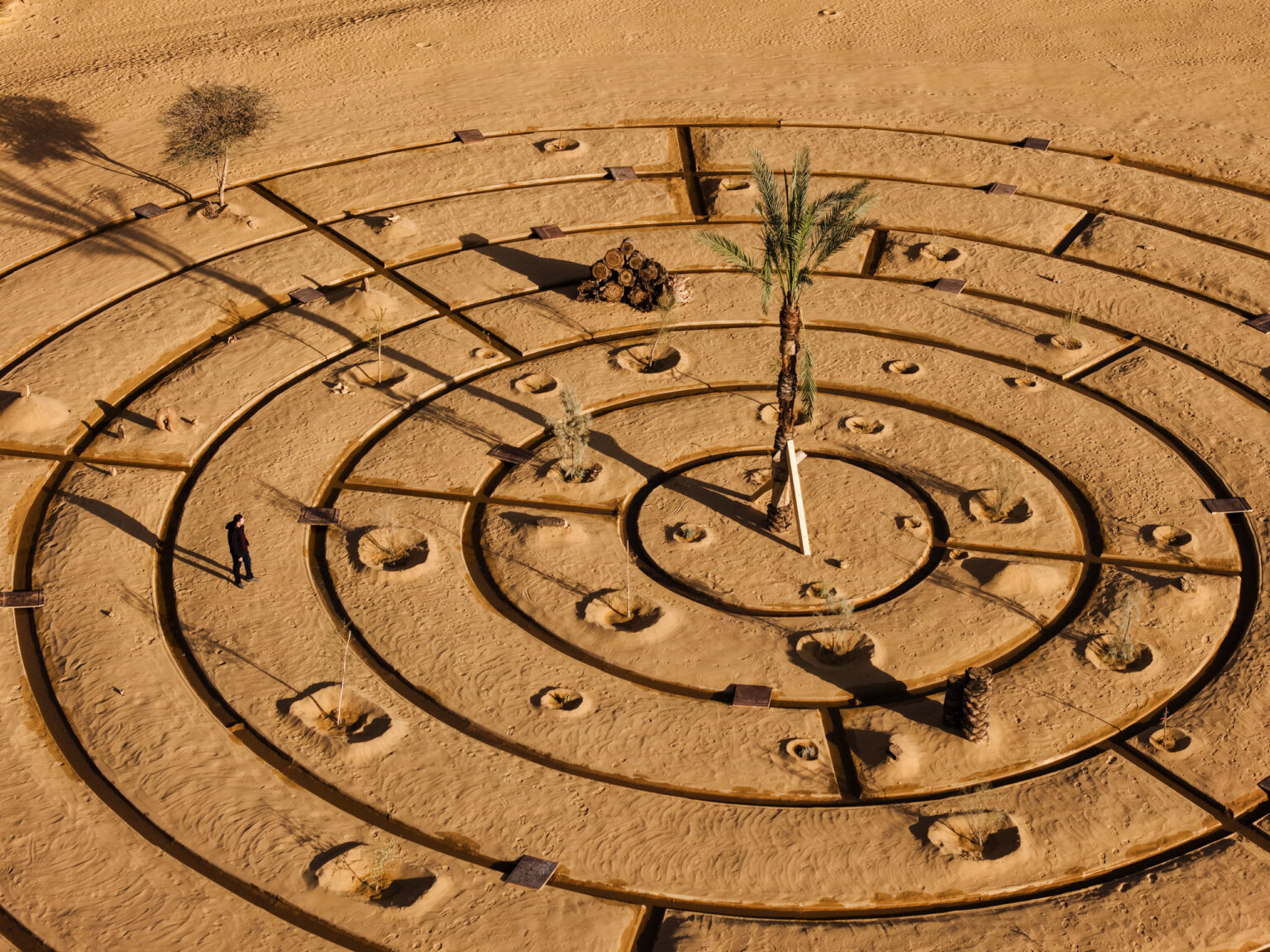
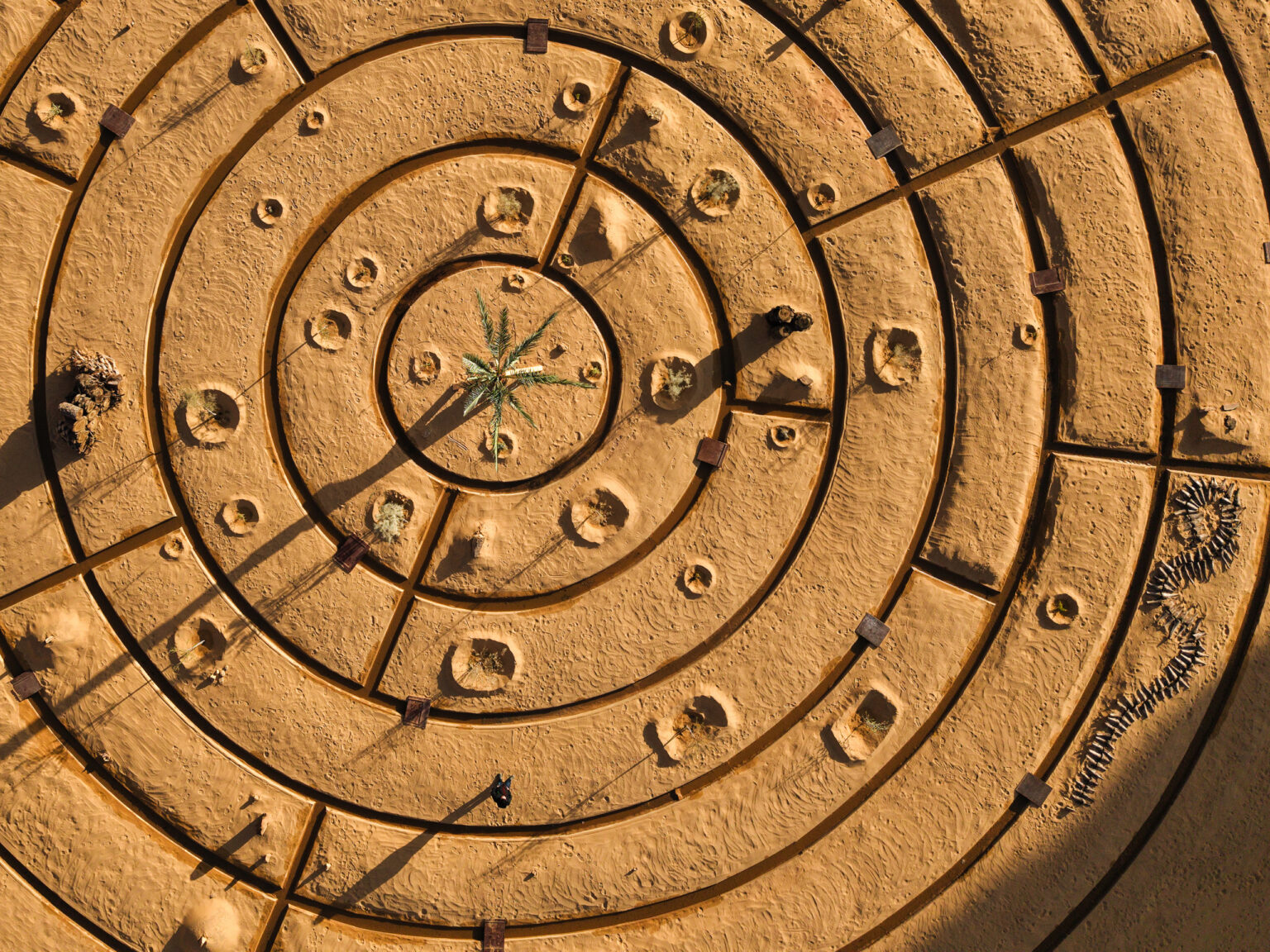
The work I try to make has long centered on ecology, memory, metaphor and poetry. Blooming from the landscapes of my childhood in Al-Ahsa, where palm trees, water channels, soil and dates are part of everyday life and hold so much meaning beyond the agricultural needs; to the cosmos and the rhythms of the universe. For me, these materials are not merely physical; they are vessels of care, endurance and the intimate relationships between people and their environment. A metaphor for empathy towards everything and everyone.
For Desert X AlUla 2026, I thought about the project as a question; what should I present, what should we show? And of course the land, the earth, holds all the answers. During our first site visit, Wejdan and I came across a tree standing coincidentally exactly where the installation now lives, but after an intimate observation of the tree, it turns out that the Acacia itself was hosting another tree, another species, which is exactly what we were thinking and talking about for Desert X AlUla, but even generally before that. So while we question ourselves, the answer was revealed to us. That encounter became the compass for the work.
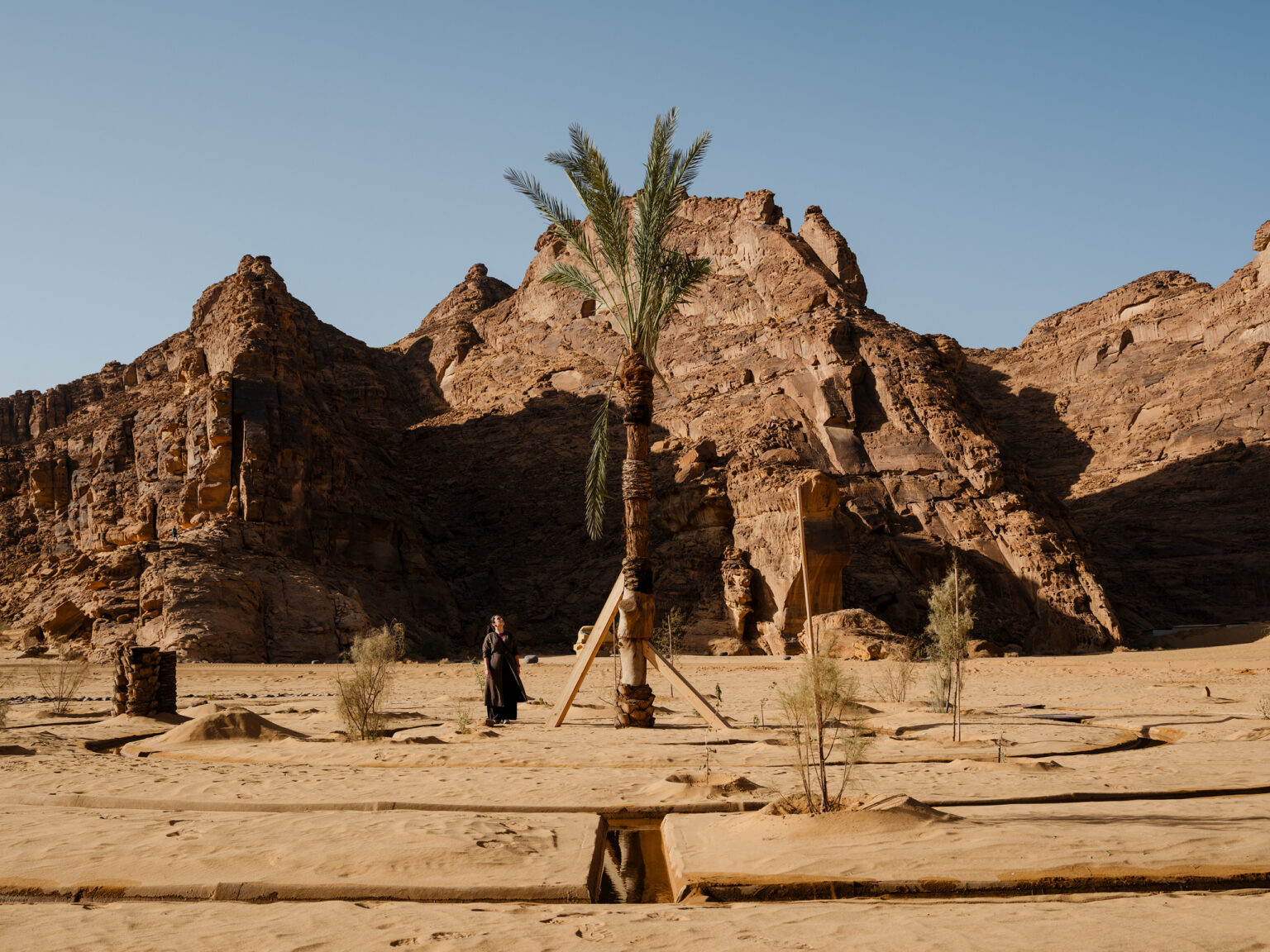
Grafting and codependency became the conceptual root of the piece. As this interaction with the tree unfolded, I was reminded of my grandfather grafting trees growing up, witnessing how a dying trunk could have an extended life, a limb living on another tree, extending and sprouting. It showcased how renewal often emerges through coexistence, how harmony naturally exists in the environment, and codependency as a crucial act of survival.
The installation unfolds as a sculptural maze; a space of questioning. Here, the maze is the space of searching; the sculptures become questions. In sourcing materials from around AlUla, the limbs of trees become the limbs of the world; fragments of the environment become an ecology of memory. Ultimately, the work suggests that the most important thing is not the answer, but the question that reopens our sense of wonder, and our curiosity to ourselves and everything else. It is a landscape of questions; an invitation to reconsider what we seek, and what we overlook. At the center stands the primary grafted sculpture, embodying an ultimate answer of harmony, and co-existence, and how with hope, with belief, we can create a wonderful dream that manifests itself out of the crumbs of the world.